
What Rangers Need - Tradition vs Modernity
Colin looks at "The Model" and what we actually need as a club
OPINION PIECE
Colin George
10/16/20252 min read
Rangers need leadership, not layers: Why the Head Coach–Sporting Director model undermines Ibrox’s identity
The modern footballing trend of separating tactical leadership from strategic oversight—installing a Head Coach beneath a Sporting Director—may suit continental clubs, but for Rangers Football Club, it’s a structural mismatch that risks eroding the very essence of what makes Ibrox tick.
A Club Built on Singular Authority
Rangers’ history is steeped in the tradition of strong, singular managerial figures—Bill Struth, Walter Smith, and even Steven Gerrard—who embodied the club’s values and commanded respect across all levels. These men weren’t just tacticians; they were architects of culture, recruitment, and long-term vision. Delegating that authority to a Sporting Director dilutes the clarity of leadership Rangers have always thrived on.
Recent seasons have shown how the Head Coach–Sporting Director model can fracture accountability. When results falter, fans are left wondering: Is it the coach’s tactics or the director’s recruitment? The sacking of Russell Martin and the subsequent admission by Rangers’ owners—“We did not get this right”—highlight how blurred lines of responsibility can lead to reactive decisions and short-termism.
Kevin Thelwell’s tenure as Sporting Director has already raised eyebrows. Recruitment under his watch has been underwhelming, with key signings failing to make the desired impact and glaring gaps in the squad left unaddressed. The lack of cohesion between the club’s transfer strategy and on-pitch needs has only deepened the disconnect between the boardroom and the terraces.
Gerrard’s Rejection Speaks Volumes
Steven Gerrard’s decision to turn down a return to Ibrox was not about sentiment—it was about structure. Reports suggest Gerrard was unwilling to work under the current Sporting Director model, preferring the autonomy he once had to shape the club’s footballing direction. Who can honestly blame him? His rejection is a damning indictment of a system that sidelines the very kind of leadership Rangers needs most.
Sporting Directors often arrive with their own philosophies, scouting networks, and long-term plans. But Rangers is not a club that needs reinvention—it needs reinforcement of its identity. Thelwell’s “collaborative approach” may sound progressive, but it risks sidelining the manager’s instinct and authority in favour of committee-style consensus. That’s not the Rangers way. His signings so far have left a lot to be desired and spending £10m on a striker has raised eyebrows across the country.
Disconnect from the Supporters
Rangers fans demand transparency, passion, and a sense of belonging. A Sporting Director, often invisible to the terraces, creates a layer of abstraction between the supporters and the footballing decisions. The recent Fan Advisory Board meeting revealed frustration with this setup—supporters want to hear from the man in charge, not a backroom executive.
What Rangers Truly Need
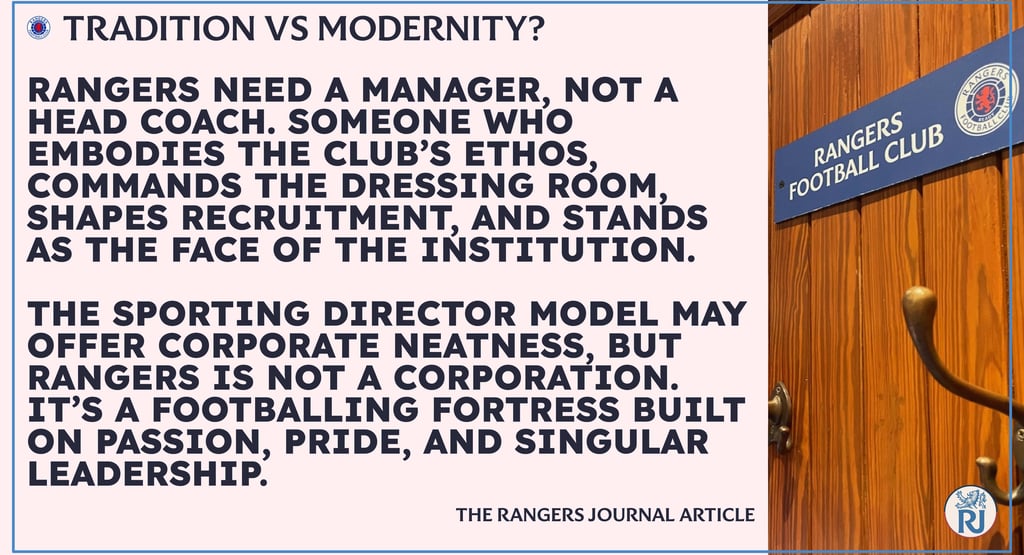
Rangers need a Manager, not a Head Coach. Someone who embodies the club’s ethos, commands the dressing room, shapes recruitment, and stands as the face of the institution. The Sporting Director model may offer corporate neatness, but Rangers is not a corporation—it’s a footballing fortress built on passion, pride, and singular leadership.
A Warning to the Board
Andrew Cavenagh and Parag Marathe must now ask themselves a critical question: Is this structure a recipe for progress—or a blueprint for disaster? The signs are already flashing red. If they continue down this path, they risk not only alienating the fanbase but undermining the very foundations of Rangers Football Club.
The Rangers Journal Podcast
News
Scouting
© 2025. All rights reserved.
Analysis